
Trichologist vs Dermatologist
Who Do You See for Hair Loss?

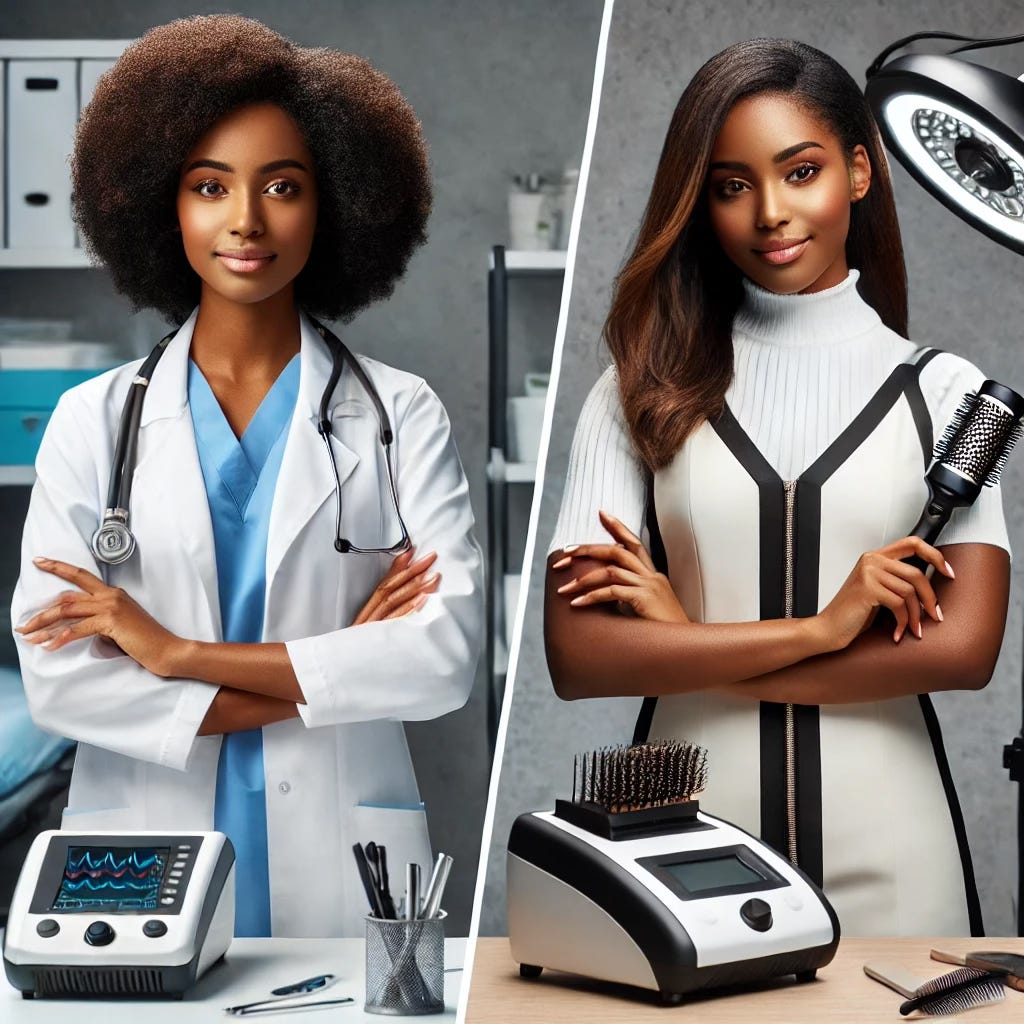
So, you’re at the salon, catching up with your hairstylist, and they casually mention, “Hey, have you noticed you’re shedding more than usual?” That’s when your heart skips a beat, right? Maybe your mind goes into panic mode, flashing through worst-case scenarios like thinning hair, bald patches, and frantic Google searches at 2 a.m. But don’t worry, I’ve got your back! The question is: who should you go to first—your trichologist or dermatologist?
Let’s break it down in the simplest way possible
.
What’s a Trichologist?
First things first: a Trichologist is a hair and scalp specialist. These are the folks who live and breathe hair. They’re like detectives but for your scalp and strands. Trichologists can’t prescribe medications like doctors, but they can offer in-depth advice and solutions on everything from scalp conditions to hair thinning, shedding, or breakage. Their main job is to help you figure out what’s going on with your hair and how to stop things from getting worse.
Trichologists are usually a great first step because they focus specifically on hair health. They’ll likely do things like examine your scalp under a microscope, ask about your diet, stress levels, and any changes in your life that could be affecting your hair. If your hair’s been misbehaving lately, a trichologist is like your hair’s personal therapist.
What’s a Dermatologist?
Now, a Dermatologist is a medical doctor who treats issues related to skin, hair, and nails. Think of them as the big guns. If your hair loss is caused by something more serious—like an autoimmune disorder, hormonal imbalance, or skin disease—this is where they come in. Dermatologists can prescribe treatments like topical medications, oral medications, or even perform procedures to help regrow or preserve your hair.
If you’ve noticed things like sudden bald patches (hello, alopecia areata), inflammation, or itching that doesn’t go away, you might need to hit up a dermatologist. They can run tests, including bloodwork or biopsies, to get to the root (pun intended!) of your hair problems.
When to See Each One?
Here’s where it gets tricky. You might be asking yourself, “But which one should I see first?”
Let me hit you with some real talk: it depends on what’s going on with your hair. Here’s how you can decide:
Go to a Trichologist if you’re dealing with:
Gradual hair thinning or shedding (you’re noticing more hair on your brush or pillow, but nothing too crazy).
Scalp issues like dandruff, dryness, or irritation that seem manageable but still annoying.
You’ve recently made lifestyle changes (new diet, high stress) and want to see if that’s affecting your hair.
Trichologists can also refer you to a dermatologist if they think there’s a medical condition that needs attention. They’re great for getting a non-medical diagnosis and treatment plan, especially if you’re looking for natural or topical solutions.
Go to a Dermatologist if you’re dealing with:
Sudden, patchy hair loss or full-blown bald spots.
Any signs of infection, like painful, red patches on your scalp.
Hair loss paired with other health changes, like fatigue or weight loss (which could point to a hormonal or autoimmune issue).
You’ve tried a bunch of over-the-counter stuff, and nothing’s working.
My Personal Journey
I’ve been in this space for years, both as a cosmetologist (23 years) and now as a trichologist-in-training, and I know how scary it can be when your hair starts acting up. When I first noticed my hair thinning, I went into total freak-out mode. But once I discovered trichology, it was like someone flipped a switch. I learned so much about my own scalp, what I was doing wrong (oh, the regret), and how to turn things around before it got too bad.
But here’s the thing: sometimes, it’s not just about switching shampoos or laying off the heat tools. Sometimes, there’s something deeper going on, and that’s where the dermatologist comes in. If your stylist is flagging hair loss, it’s worth taking it seriously and getting checked by the right professional—so you don’t waste time stressing or using the wrong treatments.
Bottom Line: Listen to Your Stylist
The key takeaway? Listen to your hairstylist when they bring up hair loss. They see your scalp every time you’re in that chair and know when something’s off. But from there, it’s up to you to follow through. If your hair loss feels like it’s not just a bad hair day (or month), get a trichologist or dermatologist involved to give you the peace of mind you deserve.
Hair loss can feel devastating, but you’re not alone in this. There’s help. And whether it’s through lifestyle changes with a trichologist or medical interventions with a dermatologist, there are ways to get ahead of it. You’ve got options. So don’t panic, okay? You’re in control.
What have you done when faced with hair loss? Drop your story in the comments below—I’d love to hear about it!